Have you ever come across the term “lavender marriage” while reading about celebrities, Hollywood history, or LGBTQ+ topics and wondered what it actually means?
The phrase often appears in discussions about famous figures, historical relationships, and social expectations. Yet many people are unfamiliar with its true meaning and significance.
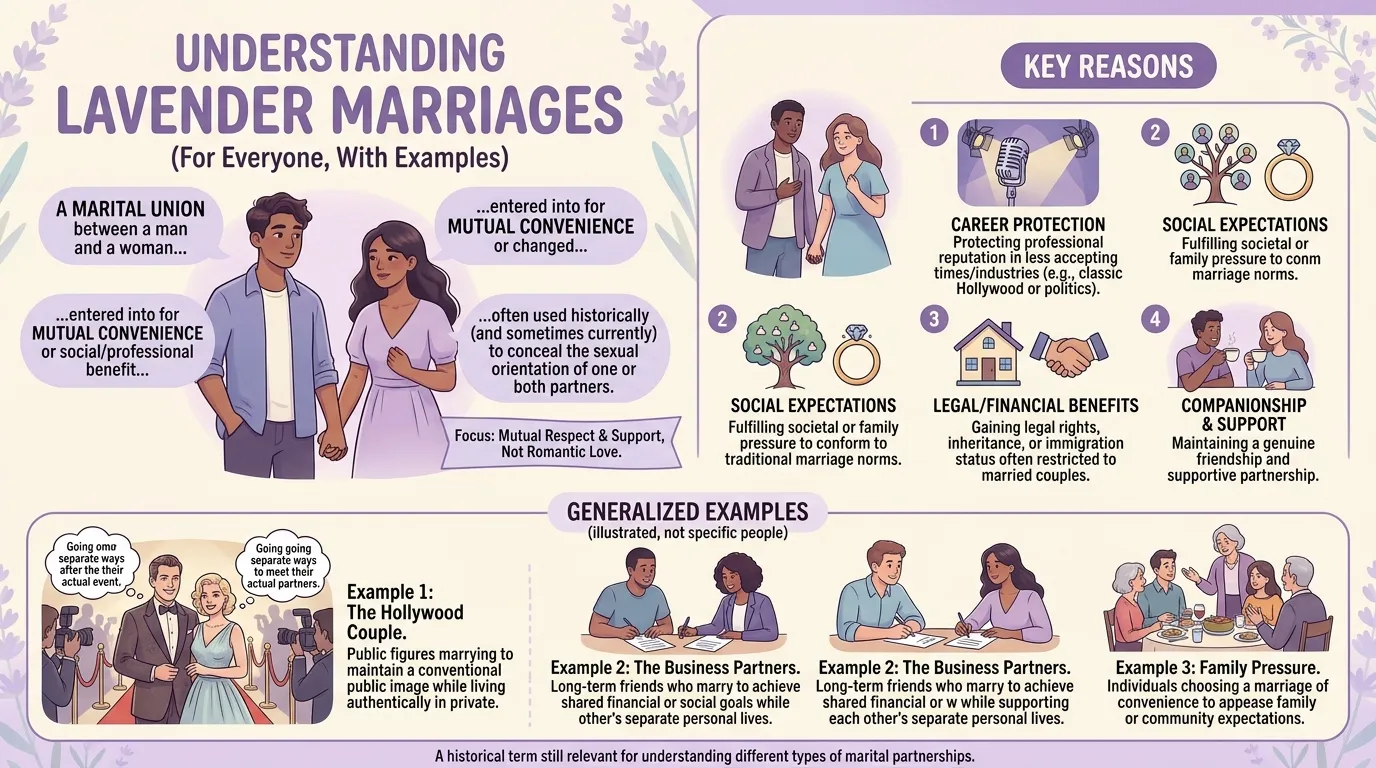
A lavender marriage refers to a marriage entered into primarily to conceal one or both partners’ sexual orientation or to maintain a socially acceptable public image.
Historically, these marriages were often formed during times when homosexuality and other non-traditional identities faced significant stigma, discrimination, or even legal consequences.
Understanding the lavender marriage meaning offers valuable insight into social history, LGBTQ+ experiences, cultural expectations, and the evolution of public attitudes toward relationships and identity.
This guide explores the definition, origins, history, examples, and relevance of lavender marriages in today’s world.
What Is a Lavender Marriage?
Simple Definition of Lavender Marriage
In simple terms, a lavender marriage is a marriage between a man and a woman that is arranged or maintained primarily to hide one or both partners’ sexual orientation from society.
Unlike traditional marriages based mainly on romantic attraction, a lavender marriage often serves social, professional, or cultural purposes. The individuals involved may care deeply for each other as friends or companions, but the marriage is not necessarily built on conventional romantic expectations.
Official Lavender Marriage Definition
The term is commonly used to describe a marriage in which one or both spouses identify as gay, lesbian, bisexual, or otherwise LGBTQ+, but choose to present themselves publicly as heterosexual through marriage.
Historically, these marriages helped individuals avoid discrimination, protect careers, maintain family relationships, or meet societal expectations.
Why Is It Called a “Lavender” Marriage?
The word “lavender” has long been associated with LGBTQ+ communities in Western culture. During the twentieth century, lavender became a symbolic color linked to discussions of sexuality and gender identity.
As a result, the phrase “lavender marriage” emerged to describe marriages that concealed same-sex attraction or protected individuals from public scrutiny regarding their personal lives.
History of Lavender Marriages
Origins of the Concept
Although the term itself became popular in the twentieth century, the practice of entering marriages for social protection existed long before the phrase was coined.
Throughout history, many societies expected adults to marry and start families. Individuals who did not conform to these expectations often faced suspicion, exclusion, or punishment.
For LGBTQ+ individuals, marriage sometimes became a practical solution to avoid unwanted attention while maintaining social acceptance.
Social Expectations and Marriage
For centuries, marriage was considered an essential milestone in adulthood. Remaining unmarried often carried social consequences, especially for public figures, politicians, religious leaders, and members of prominent families.
These pressures encouraged some individuals to enter marriages that appeared conventional, even if their private lives told a different story.
The Twentieth Century and Increased Visibility
As mass media expanded during the early twentieth century, public interest in celebrities and public figures grew dramatically. Personal lives became subjects of intense scrutiny.
During this period, lavender marriages became more visible, particularly within entertainment industries where maintaining a certain image could determine career success.
Lavender Marriages in Old Hollywood
Why Hollywood Stars Entered Lavender Marriages
Hollywood’s Golden Age is perhaps the setting most commonly associated with lavender marriages.
Movie studios carefully managed actors’ public images. At a time when homosexuality was widely stigmatized, studios often encouraged performers to appear conventionally heterosexual.
A marriage could help protect an actor’s career by reducing rumors and satisfying public expectations.
Studio Control and Public Image
Film studios invested heavily in creating marketable celebrity personas. Public scandals could damage profits and affect audience perceptions.
As a result, some performers entered marriages that helped preserve their professional reputations while allowing them to navigate private aspects of their identities.
Famous Alleged Examples
Over the years, various celebrities have been rumored to have participated in lavender marriages. However, many of these claims remain speculative and should be approached carefully.
Historical discussions often focus less on specific individuals and more on the broader social pressures that made such arrangements possible.
Why People Chose Lavender Marriages
Fear of Discrimination
One of the most significant reasons people entered lavender marriages was fear of discrimination.
In many countries, LGBTQ+ individuals faced:
- Social rejection
- Loss of employment
- Legal penalties
- Public humiliation
- Family conflict
Marriage provided a way to avoid some of these risks.
Protecting Professional Careers
Actors, musicians, politicians, military personnel, and business leaders sometimes feared that revealing their true identities could harm their careers.
A traditional-looking marriage helped maintain a socially acceptable image.
Family Expectations
Many families expected children to marry and have families of their own. Individuals who wished to avoid disappointing relatives or creating family tension sometimes viewed lavender marriages as a compromise.
Cultural and Religious Pressures
In certain cultures and religious communities, marriage remains a highly valued institution. Strong expectations regarding gender roles and sexuality can influence personal decisions about relationships.
Common Characteristics of a Lavender Marriage
Although every relationship is unique, lavender marriages often share several characteristics.
Mutual Understanding
Both partners typically understand the purpose of the marriage and agree to its terms.
Shared Goals
The marriage may help both individuals achieve common objectives, such as maintaining privacy, avoiding discrimination, or satisfying family expectations.
Public and Private Differences
In many cases, the public presentation of the relationship differs from the private reality experienced by the partners.
Emotional Support
Despite lacking traditional romantic foundations, some lavender marriages develop strong emotional bonds, friendship, trust, and mutual respect.
Lavender Marriage vs Traditional Marriage
Key Differences
Traditional marriages are generally based on romantic attraction and a desire to build a shared life together as romantic partners.
Lavender marriages often prioritize social, cultural, or practical considerations instead.
Similarities
Despite their differences, both types of marriages may involve:
- Legal commitments
- Shared responsibilities
- Financial cooperation
- Family relationships
- Long-term companionship
Comparison Table
| Feature | Lavender Marriage | Traditional Marriage |
|---|---|---|
| Main Purpose | Social or practical reasons | Romantic partnership |
| Public Image | Often important | Usually secondary |
| Romantic Attraction | May be absent | Usually present |
| Social Expectations | Major factor | Less significant |
| Privacy Concerns | Often central | Varies by couple |
Conclusion
The lavender marriage meaning extends far beyond a simple definition. It reflects a complex intersection of identity, social expectations, cultural pressures, and historical realities.
These marriages emerged during periods when many LGBTQ+ individuals faced discrimination and limited opportunities to live openly.
Today, growing acceptance and legal protections have reduced the need for lavender marriages in many parts of the world. However, understanding their history provides valuable insight into the challenges people once faced and, in some places, continue to face.
Ultimately, lavender marriages serve as a reminder of how deeply social attitudes can influence personal choices and how important authenticity, acceptance, and equality remain in modern society.

Go I am Joseph Hall, a passionate creator exploring ideas that inspire and connect. On Replysz.com, I share unique insights and trends that keep you ahead. Join me on this journey of discovery and creativity.