The phrase “tramp stamp” is one of the most recognizable tattoo-related slang terms in modern culture. While some people use it casually, others consider it outdated or even offensive.
The term typically refers to a tattoo placed on the lower back, a location that became especially popular during the late 1990s and early 2000s.
If you’ve ever wondered, “What does tramp stamp mean?” or “Why is a lower back tattoo called a tramp stamp?” you’re not alone.
The phrase has a fascinating history that reflects changing attitudes toward body art, fashion, gender stereotypes, and self-expression.
In this guide, we’ll explore the tramp stamp meaning, where the term originated, why it became controversial, and how lower back tattoos are viewed in today’s tattoo culture.
What Does Tramp Stamp Mean?
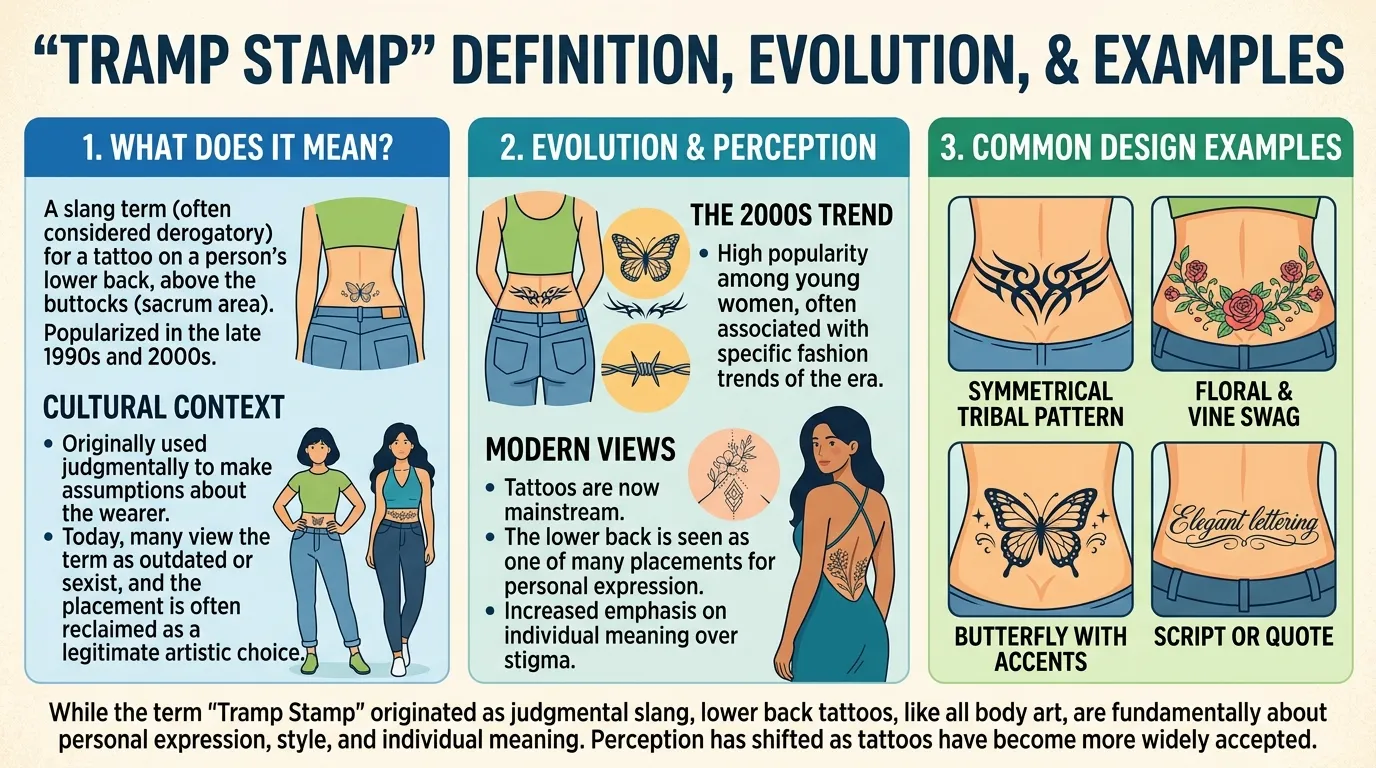
A tramp stamp is a slang term used to describe a tattoo located on the lower back, usually centered just above the waistline. The phrase gained popularity in the early 2000s and became associated with women who chose this particular tattoo placement.
Although the tattoo itself is simply body art, the term “tramp stamp” carries negative connotations because it implies promiscuity or questionable behavior. For this reason, many tattoo enthusiasts and artists avoid using the phrase today.
In modern discussions, most people prefer to refer to these tattoos as lower back tattoos rather than using the slang nickname.
What Is a Tramp Stamp Tattoo?
A tramp stamp tattoo is any design placed on the lower back area. This location became famous because it offers a wide, symmetrical canvas that can accommodate many artistic styles.
Common Characteristics
- Positioned above the hips
- Often symmetrical in design
- Can be hidden easily with clothing
- Provides ample space for detailed artwork
Popular Tramp Stamp Designs
Over the years, several tattoo styles became strongly associated with lower back placement:
Butterfly Tattoos
Butterflies symbolize transformation, beauty, and personal growth. They were among the most popular lower back tattoo choices during the early 2000s.
Tribal Designs
Tribal patterns feature bold black lines and symmetrical shapes. These designs were especially trendy during the peak of the tramp stamp era.
Floral Tattoos
Flowers represent beauty, femininity, growth, and new beginnings. Roses, lilies, and cherry blossoms remain popular choices.
Fairy and Angel Tattoos
Fantasy-inspired tattoos often symbolize freedom, spirituality, and imagination.
Heart and Star Designs
Simple hearts and stars became popular among first-time tattoo enthusiasts because they were easy to customize.
Origin of the Term “Tramp Stamp”
The term “tramp stamp” did not originate from tattoo culture itself. Instead, it emerged through popular media and everyday slang.
The phrase became widely used during the late 1990s and early 2000s when lower back tattoos exploded in popularity. Television shows, comedy sketches, magazines, and internet forums helped spread the nickname.
As the tattoo placement became more common, cultural stereotypes began forming around it. Unfortunately, those stereotypes often targeted women and contributed to the negative reputation of the term.
Today, many people view the phrase as a reflection of the social attitudes of that era rather than an accurate description of the tattoo itself.
Why Is It Called a Tramp Stamp?
The nickname developed because some people associated lower back tattoos with sexual attractiveness and provocative fashion trends.
During the early 2000s, low-rise jeans and crop tops frequently exposed the lower back area. As a result, tattoos in this location became highly visible and received increased public attention.
Over time, unfair stereotypes developed. Some individuals began using the phrase “tramp stamp” to suggest that women with lower back tattoos were seeking attention. These assumptions were largely based on cultural prejudice rather than reality.
The tattoo placement itself has no inherent meaning. The negative associations came from social attitudes rather than the artwork.
History of Lower Back Tattoos
Ancient Tattoo Traditions
Tattooing has existed for thousands of years across many civilizations. Ancient cultures used tattoos for religious, spiritual, social, and decorative purposes.
While lower back tattoos are often associated with modern fashion, tattoos on various parts of the body have carried symbolic meaning throughout history.
Rise During the 1990s
The lower back tattoo trend began gaining momentum during the 1990s. Several factors contributed to its popularity:
- Growing mainstream acceptance of tattoos
- Influence of celebrities
- Fashion trends that highlighted the waistline
- Increased availability of tattoo studios
Peak Popularity in the Early 2000s
By the early 2000s, lower back tattoos had become one of the most requested tattoo placements.
Celebrities, models, and pop culture icons frequently showcased their tattoos, inspiring countless people to get similar designs.
Cultural Significance of Tramp Stamps
Beyond fashion trends, lower back tattoos have represented personal expression for many individuals.
Self-Expression
For many people, tattoos tell a story. A lower back tattoo may symbolize a personal journey, an important life event, or a meaningful belief.
Confidence and Body Positivity
Some individuals choose lower back tattoos because they appreciate the body’s natural symmetry and view the placement as aesthetically pleasing.
Artistic Freedom
The lower back provides a large, balanced canvas that allows artists to create intricate and visually striking designs.
Is the Term “Tramp Stamp” Offensive?
This question generates considerable debate.
Why Some People Find It Offensive
Many critics argue that the term is sexist because it applies negative stereotypes primarily to women.
The phrase can imply judgment about a person’s character based solely on their tattoo placement, which many people consider unfair.
Why Others Use It Casually
Some individuals view the phrase as harmless slang and use it without intending offense. Others use it humorously because of its long history in popular culture.
Modern Perspective
Today, many tattoo artists and enthusiasts encourage using more neutral language such as “lower back tattoo.” This approach focuses on the artwork rather than outdated stereotypes.
Symbolism of Lower Back Tattoos
The meaning of a lower back tattoo depends entirely on the chosen design.
Transformation
Butterflies often symbolize change, growth, and personal evolution.
Strength
Tribal designs can represent resilience, courage, and identity.
Love
Heart-themed tattoos commonly symbolize affection, relationships, and emotional connections.
Spirituality
Angels, wings, mandalas, and sacred symbols may represent spiritual beliefs and personal enlightenment.
Are Tramp Stamps Making a Comeback?
Surprisingly, yes.
Fashion trends often move in cycles, and lower back tattoos have experienced a revival among younger generations.
Many tattoo artists report renewed interest in:
- Fine-line lower back tattoos
- Minimalist designs
- Floral artwork
- Custom symmetrical pieces
- Modern tribal-inspired patterns
Social media platforms have also contributed to the resurgence by showcasing updated and creative interpretations of the classic lower back tattoo.
Conclusion:
The tramp stamp meaning goes far beyond a simple tattoo placement. While the term originally emerged as slang for lower back tattoos, it eventually became associated with stereotypes that many people now consider outdated and unfair.
Today, lower back tattoos are increasingly viewed through a more positive lens. Rather than focusing on old labels, modern tattoo culture emphasizes creativity, individuality, and personal expression.
Whether you love them or dislike them, lower back tattoos remain an important part of tattoo history. Their continued popularity demonstrates how fashion, culture, and self-expression constantly evolve over time.

Go, I am Noah Parker, a curious creator always chasing ideas that spark inspiration. I love exploring trends and sharing insights that help you stay ahead. On Replysz.com, I turn creativity into stories that connect and inspire.