Have you ever met someone who is physically an adult but emotionally behaves much younger? Maybe they avoid responsibility, react immaturely during conflicts, or struggle to handle everyday adult situations.
Many people describe this behavior using the term “arrested development.”
But what does arrested development actually mean? Is it a psychological condition, a personality trait, or simply emotional immaturity?
In this article, we’ll explore the complete meaning of arrested development, its psychological background, common signs, causes, real-life examples, and ways people can emotionally grow beyond it.
What Does Arrested Development Mean?
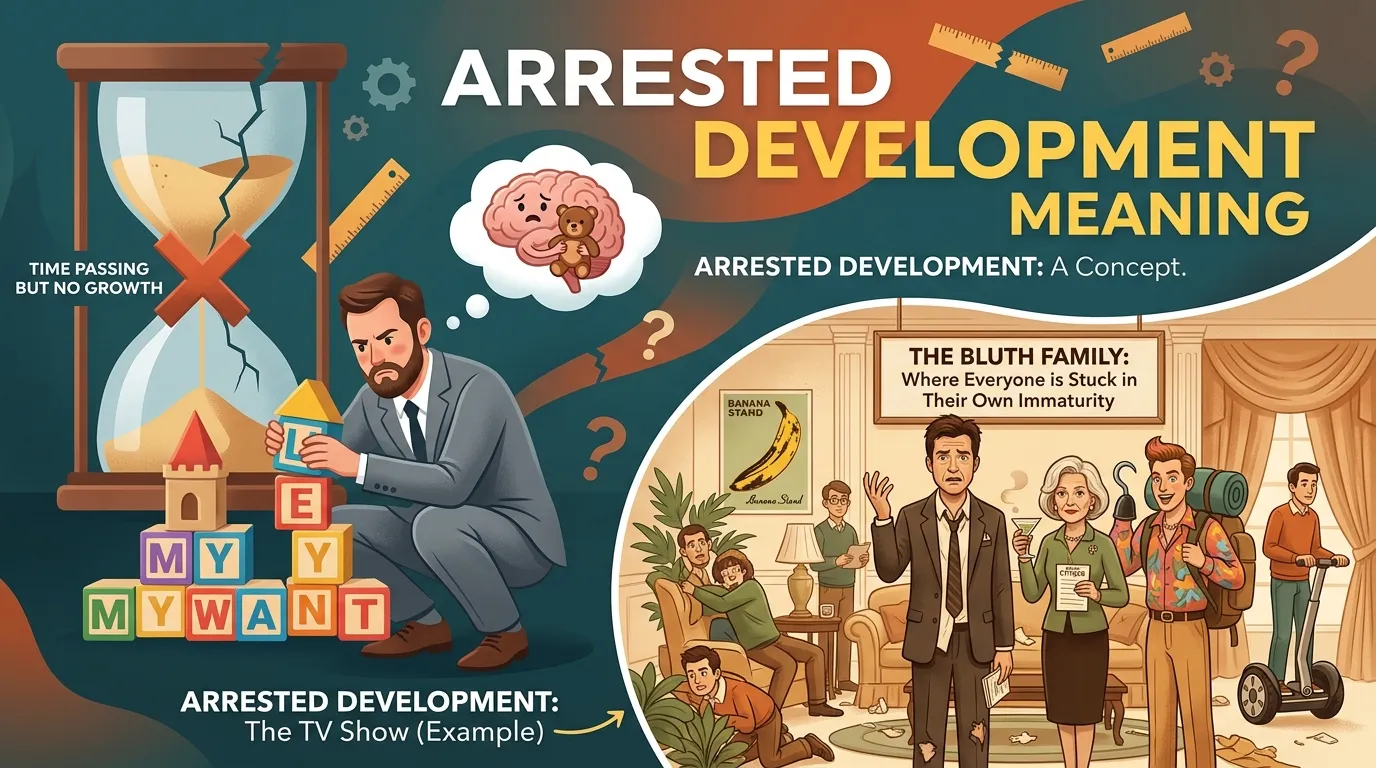
Arrested development refers to a situation where a person’s emotional, mental, or psychological growth stops at a certain stage. Even though the person physically grows older, their emotional maturity may remain stuck at a younger age.
In simple words, it means someone struggles to emotionally grow up.
The term is often used in psychology to describe delayed emotional development, but people also use it casually when talking about adults who act immaturely.
For example:
- An adult who throws tantrums during disagreements
- Someone who avoids responsibility and depends on others
- A person who reacts emotionally like a teenager despite being much older
These behaviors can sometimes indicate emotional arrested development.
Arrested Development in Psychology
In psychology, arrested development describes interrupted emotional or mental growth. This interruption can happen because of trauma, stress, unhealthy environments, or emotional difficulties experienced during childhood or adolescence.
Psychologists believe emotional development happens in stages. When a person experiences severe emotional pain or unhealthy coping mechanisms, their emotional maturity may stop progressing normally.
This does not necessarily mean the person is unintelligent. Many individuals with arrested development may succeed academically or professionally while still struggling emotionally.
Is Arrested Development a Mental Disorder?
Arrested development itself is not officially classified as a mental disorder. Instead, it is considered a psychological condition or behavioral pattern linked to emotional immaturity.
However, it may appear alongside conditions such as:
- Anxiety
- Depression
- PTSD
- Personality disorders
- Addiction issues
The Origin of the Term Arrested Development
The phrase “arrested development” originally came from developmental psychology and psychoanalysis.
Sigmund Freud’s theories about emotional and psychological development influenced the idea that emotional growth can become “stuck” at a particular stage because of unresolved experiences or trauma.
Today, the term is used more broadly in psychology and everyday language.
Signs of Arrested Development
Recognizing the signs of arrested development can help people better understand their own emotional patterns or the behavior of others.
Emotional Immaturity
One of the biggest signs is emotional immaturity. The person may struggle to control emotions, react impulsively, or become overly sensitive during conflicts.
Examples include:
- Overreacting to criticism
- Difficulty accepting feedback
- Mood swings
- Blaming others constantly
Avoiding Responsibility
Adults with arrested development often avoid responsibilities associated with adulthood.
This may include:
- Financial irresponsibility
- Lack of career direction
- Avoiding commitments
- Refusing accountability
Childish Behavior
Some people continue behaving like teenagers emotionally even in adulthood.
Common examples include:
- Seeking constant attention
- Throwing emotional tantrums
- Being overly dependent on parents or partners
- Acting selfishly in relationships
Fear of Commitment
People with arrested development may struggle with long-term relationships, career goals, or adult responsibilities because they fear emotional pressure and commitment.
Poor Conflict Resolution
Instead of handling disagreements maturely, they may:
- Shut down emotionally
- Become defensive
- Use manipulation
- Avoid difficult conversations
Common Causes of Arrested Development
There is no single cause of arrested development. Usually, several emotional and psychological factors contribute to it.
Childhood Trauma
Trauma is one of the most common causes. Painful childhood experiences can interrupt emotional growth.
Examples include:
- Abuse
- Neglect
- Bullying
- Family conflict
- Loss of a loved one
When emotional pain is unresolved, a person may emotionally remain stuck at the age when the trauma occurred.
Overprotective Parenting
Children who are never allowed to make independent decisions may struggle with adulthood later in life.
Overprotective parenting can lead to:
- Dependency
- Fear of failure
- Low confidence
- Lack of independence
Addiction and Substance Abuse
Addiction can emotionally freeze a person at the stage where the addiction began. Emotional growth often becomes secondary to the addiction itself.
Mental Health Struggles
Conditions such as anxiety, depression, and PTSD can affect emotional maturity and coping skills.
Toxic Relationships
Emotionally unhealthy relationships may reinforce immature coping behaviors and prevent emotional growth.
Arrested Development in Adults
Arrested development is often more noticeable in adults because society expects emotional maturity with age.
In Relationships
Adults with emotional arrested development may:
- Avoid serious commitment
- Depend heavily on partners
- React immaturely during arguments
- Struggle with empathy
In Careers
Workplace challenges may include:
- Difficulty following structure
- Poor teamwork
- Avoiding responsibility
- Emotional reactions to criticism
In Family Life
Some adults remain emotionally dependent on parents even later in life. Others may struggle with parenting responsibilities themselves.
Real-Life Examples of Arrested Development
Understanding real-life examples can make the concept easier to recognize.
Example 1: Emotional Reactions
A 35-year-old man becomes extremely angry and refuses to speak to friends for days whenever someone disagrees with him. His reactions resemble teenage emotional behavior.
Example 2: Fear of Responsibility
A woman in her 30s constantly changes jobs because she dislikes commitment and avoids long-term responsibility.
Example 3: Dependency Issues
An adult who still relies entirely on parents for financial support despite being capable of independence may show signs of emotional arrested development.
Arrested Development vs Emotional Immaturity
People often confuse arrested development with emotional immaturity, but they are not exactly the same.
Emotional Immaturity
Emotional immaturity usually refers to temporary childish behavior or lack of emotional skills.
Arrested Development
Arrested development is deeper and often linked to unresolved emotional issues or trauma that interrupted psychological growth.
In many cases, emotional immaturity can be a symptom of arrested development.
Arrested Development in Popular Culture
Many people also recognize the term because of the comedy TV show “Arrested Development.”
The show uses the phrase humorously because many characters behave emotionally immature despite being adults.
Over time, the phrase became popular in internet culture and social discussions.
Can Arrested Development Be Treated?
Yes, emotional growth is possible. People can improve emotional maturity and develop healthier coping skills over time.
Therapy and Counseling
Professional therapy can help individuals understand unresolved trauma and emotional patterns.
Popular approaches include:
- Cognitive Behavioral Therapy (CBT)
- Trauma therapy
- Family counseling
- Emotional regulation therapy
Self-Awareness
The first step toward emotional growth is recognizing unhealthy behaviors and emotional reactions.
Developing Emotional Intelligence
People can improve by learning:
- Communication skills
- Emotional control
- Empathy
- Accountability
Building Healthy Habits
Healthy routines, supportive relationships, and personal discipline can encourage emotional maturity.
How to Overcome Arrested Development
Overcoming arrested development takes time, self-awareness, and emotional effort.
Accept Emotional Responsibility
Stop blaming others for every emotional reaction or life problem.
Learn Healthy Coping Skills
Instead of avoiding emotions, learn healthier ways to process stress and pain.
Seek Professional Help
Therapy can uncover deep emotional wounds that may be holding personal growth back.
Practice Independence
Taking responsibility for finances, relationships, and life decisions can strengthen emotional maturity.
Work on Communication
Learning how to express emotions calmly and honestly improves personal relationships and emotional growth.
Common Misconceptions About Arrested Development
“It Means Someone Is Stupi”
False. Emotional maturity and intelligence are different things. Someone can be highly intelligent yet emotionally immature.
“Only Young People Experience It”
Adults of any age can experience arrested development.
“People Cannot Change”
Emotional growth is possible with effort, support, and self-awareness.
“It Is Always Caused by Trauma”
While trauma is a common factor, arrested development can also result from environment, parenting, addiction, or emotional avoidance.
Spiritual and Emotional Perspective
Some people view arrested development through a spiritual lens.
They believe emotional stagnation may reflect:
- Unhealed inner child wounds
- Fear-based living
- Emotional blockages
- Resistance to personal growth
Practices such as mindfulness, meditation, journaling, and self-reflection may support emotional healing.
FAQs:
What does arrested development mean emotionally?
Emotionally, arrested development means a person’s emotional maturity stops progressing normally, causing immature emotional behavior in adulthood.
Is arrested development permanent?
No. With therapy, self-awareness, and emotional work, people can continue growing emotionally.
Can adults have arrested development?
Yes. Many adults experience emotional arrested development because of unresolved trauma or unhealthy coping patterns.
Is arrested development a mental disorder?
It is not officially classified as a mental disorder, but it may be connected to emotional or psychological conditions.
What causes emotional development to stop?
Trauma, addiction, stress, toxic relationships, and unhealthy childhood environments can interrupt emotional growth.
Conclusion:
Arrested development is more than simply acting childish. It refers to emotional or psychological growth becoming stuck because of trauma, stress, unhealthy experiences, or emotional struggles.
While the signs may include emotional immaturity, fear of responsibility, and relationship difficulties, emotional growth is still possible. With self-awareness, therapy, healthy habits, and emotional healing, people can gradually develop greater maturity and emotional stability.
Understanding arrested development helps create compassion not only for others but also for ourselves as we continue growing emotionally throughout life.