Have you ever been reading a business report, checking a company’s financial statements, or scrolling through a discussion about stocks and suddenly seen the term SG&A?
The first time I came across it, I thought it was just another confusing business abbreviation. Many people see SG&A in financial reports and wonder what it actually means and why companies talk about it so much.
The good news is that SG&A is not as complicated as it looks. Once you understand the full form and purpose, you’ll notice it appearing everywhere in accounting, investing, and business conversations.
Quick Answer:
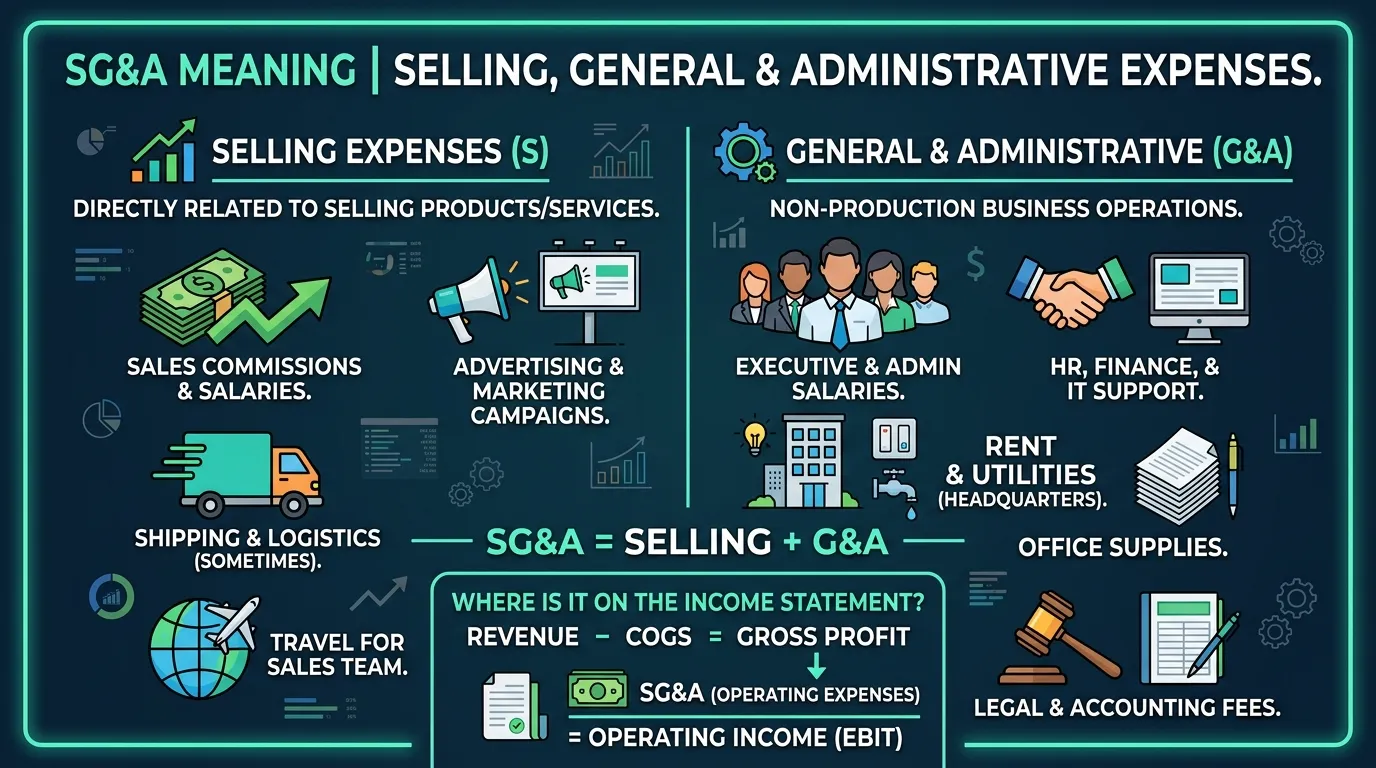
SG&A means Selling, General, and Administrative Expenses. It’s a professional business term used to describe the everyday costs of running a company that are not directly related to making a product or providing a service.
What Does SG&A Mean in Text?
SG&A stands for Selling, General, and Administrative Expenses.
This term is commonly used in accounting, finance, business reports, and company earnings discussions. It refers to the operating expenses a company incurs while running its business.
These expenses can include:
- Employee salaries
- Marketing and advertising costs
- Office rent
- Utilities
- Administrative expenses
- Travel costs
- Insurance
For example:
“Our SG&A expenses increased this quarter because we expanded our marketing campaigns.”
In simple words, SG&A represents the costs of managing and operating a business beyond manufacturing or production.
In short: SG&A = Selling, General, and Administrative Expenses = The everyday operating costs of running a business.
Where Is SG&A Commonly Used?
You will usually see SG&A in professional and business-related settings rather than casual texting.
📊 Financial Reports
- Company annual reports
- Quarterly earnings reports
- Income statements
💼 Business Meetings
- Budget discussions
- Expense planning
- Cost management reviews
📈 Investing Communities
- Stock market forums
- Investor presentations
- Financial analysis discussions
🏢 Accounting and Finance
- Accounting software
- Corporate finance teams
- Business planning documents
📱 Professional Online Platforms
- LinkedIn discussions
- Business blogs
- Finance-related social media content
Tone: Professional, formal, and business-focused.
Examples of SG&A in Conversation
Here are some realistic examples showing how SG&A is used.
A: why did profits drop this quarter?
B: sg&a expenses increased because of new marketing campaigns.
A: what’s the biggest expense after production costs?
B: usually sg&a takes up a large portion of the budget.
A: the company missed earnings estimates 😬
B: yeah, sg&a spending was much higher than expected.
A: how can we improve profitability?
B: reducing sg&a costs could help.
A: did you read the earnings report?
B: yes, sg&a was down 8% compared to last year.
A: investors seem happy today 📈
B: the company reported lower sg&a expenses.
A: what should i look at in the income statement?
B: check revenue, profit margins, and sg&a expenses.
When to Use and When Not to Use SG&A
✅ When To Use
Use SG&A when:
- Discussing company finances
- Reading earnings reports
- Talking about accounting
- Analyzing stocks
- Creating business budgets
- Reviewing operating expenses
❌ When Not To Use
Avoid SG&A when:
- Casual conversations with friends
- Personal text messages
- Social chats unrelated to business
- Situations where people may not understand accounting terms
- Informal discussions without financial context
| Context | Example Phrase | Why It Works |
| Investor Discussion | “SG&A increased by 5% this quarter.” | Financially accurate |
| Business Meeting | “Let’s review our SG&A expenses.” | Professional terminology |
| Accounting Report | “SG&A totaled $2 million.” | Standard accounting usage |
| Casual Chat | “The company’s operating costs went up.” | Easier for non-finance audiences |
Similar Slang Words or Alternatives
Although SG&A is technically a business acronym rather than internet slang, several related financial terms are often used alongside it.
| Slang/Acronym | Meaning | When to Use |
| OPEX | Operating Expenses | General business expenses |
| COGS | Cost of Goods Sold | Production-related costs |
| EBITDA | Earnings Before Interest, Taxes, Depreciation, and Amortization | Profitability analysis |
| CAPEX | Capital Expenditures | Long-term investments |
| ROI | Return on Investment | Measuring profitability |
| P&L | Profit and Loss Statement | Financial performance reviews |
Understanding these terms can make financial reports much easier to read.
FAQs:
Is SG&A a slang term?
No. SG&A is a professional accounting and finance acronym rather than internet slang.
What does SG&A stand for?
SG&A stands for Selling, General, and Administrative Expenses.
Is SG&A good or bad?
SG&A itself is neither good nor bad. It simply represents business operating expenses. Investors often monitor whether these costs are increasing or decreasing.
Where can I find SG&A on financial statements?
You can usually find SG&A on a company’s income statement or earnings report.
Why do investors pay attention to SG&A?
Because changes in SG&A can affect profitability. Lower expenses may improve profits, while higher expenses can reduce earnings.
Does SG&A include employee salaries?
Yes, many employee salaries and administrative payroll expenses are included in SG&A.
Is advertising part of SG&A?
Yes. Marketing and advertising expenses are commonly classified under SG&A.
Can small businesses track SG&A?
Absolutely. Monitoring SG&A helps businesses manage costs and improve efficiency.
Conclusion:
SG&A is a common business acronym that stands for Selling, General, and Administrative Expenses. It represents the everyday costs required to operate a company, including salaries, rent, marketing, insurance, and administrative expenses.
While you won’t often see SG&A in casual text messages or social media conversations, it appears frequently in accounting, investing, and corporate finance discussions.
Understanding SG&A can help you read financial statements with more confidence and better evaluate a company’s performance. Investors, accountants, managers, and business owners all use this metric to understand how efficiently a company is operating.
The next time you see SG&A in an earnings report or business article, you’ll know exactly what it means and why it matters.

Go I am Joseph Hall, a passionate creator exploring ideas that inspire and connect. On Replysz.com, I share unique insights and trends that keep you ahead. Join me on this journey of discovery and creativity.