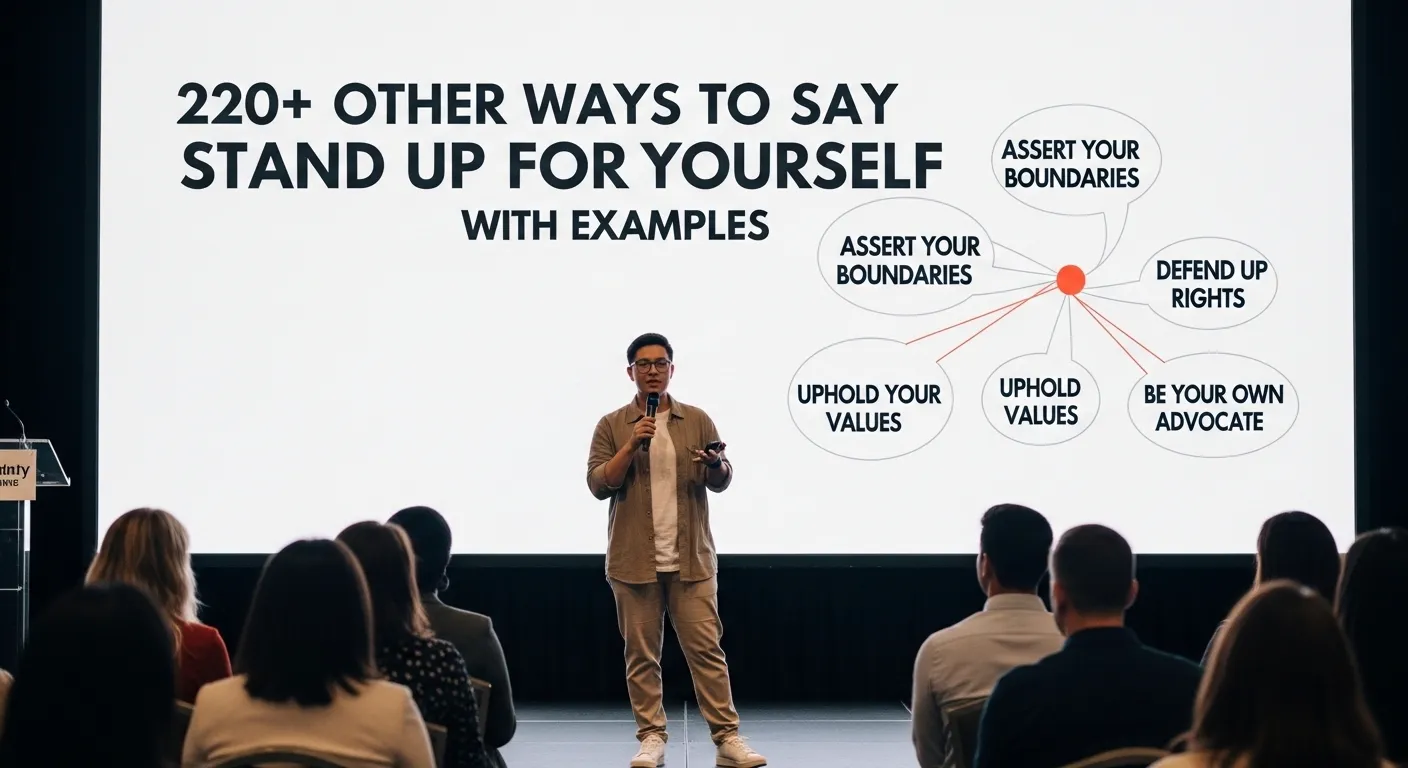
I still remember a moment when I stayed quiet even though I knew I should speak up. Someone took credit for my work, and I felt frustrated inside. At first, I thought staying silent would keep the peace.
But later, I realized that not speaking up only made me feel worse. That experience taught me something important. Sometimes you have to stand up for yourself, even if it feels uncomfortable.
Maybe you have faced a similar moment too. A time when someone crossed a line, ignored your effort, or treated you unfairly. I have been there, and I learned that defending your voice does not mean being rude or aggressive. It simply means respecting your own value.
In this guide, I will share other ways to say stand up for yourself. These phrases can help you express confidence, protect your boundaries, and speak clearly when it matters most. Think of it as learning small but powerful ways to make your voice heard.
Speak Up Clearly
These phrases focus on using your voice with confidence.
- Speak up
- Say what you think
- Share your opinion
- Tell people how you feel
- Voice your thoughts
- Speak your mind
- Let your voice be heard
- State your view
- Express your thoughts
- Say your piece
- Talk openly
- Speak with confidence
- Put your thoughts out there
- Tell your side
- Say what matters to you
- Speak honestly
- Speak without fear
- Say what is on your mind
- Be open about your feelings
- Speak clearly for yourself
Show Confidence
These options highlight self-belief and inner strength.
- Be confident
- Believe in yourself
- Trust your voice
- Show self respect
- Hold your ground
- Stand firm
- Be bold
- Show courage
- Walk with confidence
- Act with confidence
- Be strong about your needs
- Back your own ideas
- Believe your opinion matters
- Be sure of yourself
- Show inner strength
- Carry yourself with pride
- Be brave with your words
- Stay strong in your views
- Speak with certainty
- Own your voice
Protect Your Boundaries
These phrases focus on setting limits.
- Set boundaries
- Protect your space
- Guard your time
- Respect your limits
- Draw a line
- Say that is enough
- Keep your boundaries clear
- Protect your peace
- Do not allow disrespect
- Make your limits known
- Set clear limits
- Respect your own needs
- Stop people crossing the line
- Keep control of your space
- Stand by your limits
- Protect your energy
- Say what is not okay
- Make your limits clear
- Hold your boundaries
- Keep your space safe
Defend Your Rights
These expressions focus on fairness and respect.
- Defend your rights
- Stand up for your rights
- Protect what is fair
- Speak for your rights
- Claim what you deserve
- Support your rights
- Stand for fairness
- Demand respect
- Stand for what is right
- Support yourself
- Protect your interests
- Speak against unfair treatment
- Insist on respect
- Claim your voice
- Stand for justice
- Refuse unfair treatment
- Back your rights
- Protect your dignity
- Stand for equality
- Speak against wrong behavior
Say No When Needed
Sometimes standing up for yourself simply means refusing.
- Say no
- Politely refuse
- Turn it down
- Decline the request
- Say you cannot do it
- Say that will not work for you
- Set a firm no
- Refuse with respect
- Turn away from pressure
- Say you are not comfortable
- Let them know you disagree
- Reject the idea
- Push back politely
- Say that crosses a line
- Stand by your no
- Choose not to accept
- Say you will pass
- Do not agree to everything
- Stick with your answer
- Refuse calmly
Assert Yourself
These phrases focus on calm and confident self-expression.
- Assert yourself
- Be assertive
- Speak with authority
- Take a stand
- State your position
- Make your stance clear
- Be firm in your view
- Speak with strength
- Stand by your words
- Be clear about what you want
- Speak up for your needs
- Take your place in the conversation
- Put your foot down
- Make your voice count
- State your needs
- Make your point clear
- Speak with purpose
- Hold to your position
- Be direct about your needs
- Stand by your decision
Support Yourself
These expressions focus on self loyalty.
- Support yourself
- Back yourself
- Be on your own side
- Stand with yourself
- Believe your needs matter
- Value your voice
- Be loyal to yourself
- Put yourself first sometimes
- Care about your own needs
- Trust your judgment
- Stay true to yourself
- Respect yourself
- Stand by your values
- Keep faith in yourself
- Defend your choices
- Protect your self worth
- Be your own advocate
- Stand by what you believe
- Stay loyal to your voice
- Be proud of your views
Keep Your Ground
These phrases focus on staying firm under pressure.
- Hold your ground
- Stay firm
- Stand firm
- Do not back down
- Stay strong
- Stick to your view
- Stay steady
- Remain firm
- Stand your ground
- Stay true to your decision
- Refuse to give in
- Hold steady
- Keep your stance
- Stand tall
- Stay strong in your belief
- Hold your position
- Keep firm boundaries
- Stay solid in your choice
- Stand steady
- Stay grounded
Speak Against Disrespect
These options work well when someone treats you unfairly.
- Call out bad behavior
- Speak against disrespect
- Challenge rude behavior
- Point out unfair actions
- Address the problem
- Confront the issue
- Say that is not okay
- Stand against bullying
- Speak up against hurtful words
- Push back against disrespect
- Speak against unfair talk
- Question bad treatment
- Address rude comments
- Challenge unfair rules
- Say you deserve respect
- Stop disrespect early
- Call out the problem
- Speak against insults
- Respond to unfair blame
- Speak against wrong treatment
Stay True to Yourself
These phrases highlight honesty and personal values.
- Stay true to yourself
- Follow your values
- Honor your beliefs
- Be honest about your needs
- Speak your truth
- Stay real with yourself
- Stand by your values
- Be true to your voice
- Live by your beliefs
- Keep your integrity
- Stay honest about your feelings
- Follow what feels right
- Stay loyal to your values
- Speak from the heart
- Be genuine about your needs
- Stand by your principles
- Stay authentic
- Be real about your limits
- Respect your beliefs
- Stick with your values
Conclusion:
Standing up for yourself is an important life skill. It means speaking clearly about your needs, feelings, and boundaries. Sometimes the phrase stand up for yourself can sound strong or serious, but there are many other ways to express the same idea in everyday language. Using different phrases can help you sound more natural in conversations, writing, or professional situations.
For example, you might say speak up for yourself when encouraging someone to share their opinion. In other situations, phrases like defend your position, assert yourself, or stand your ground work well. Each expression carries the same core message: valuing your voice and not allowing others to ignore or dismiss your rights.
Learning these alternatives also improves communication. It allows you to match your words with the tone of the moment, whether it is casual, supportive, or formal. In the end, the goal is confidence. When you know how to express yourself in different ways, it becomes easier to protect your boundaries and communicate with clarity and respect.