Hey, I want to share something that happened to me recently about Other Ways to Say It States in an Essay. I was chatting with a friend when this term suddenly popped up, and honestly, I had no clue what it meant at first.
I kept thinking, “Am I missing something here?” It felt a little confusing, and I didn’t want to respond the wrong way.
So, I decided to dive in and look up Other Ways to Say It States in an Essay to understand its meaning and context. After learning about it, I realized how important it is to know these kinds of terms to avoid awkward moments in conversations.
I handled it by understanding the proper meaning and responding confidently. Now, whenever I see Other Ways to Say It States in an Essay in chats or social media, I feel prepared and ready to use it correctly.
Explaining Facts Clearly
- It explains
- It shows
- It says
- It tells us
- It points out
- It shares
- It presents
- It gives
- It lays out
- It notes
- It outlines
- It mentions
- It reports
- It expresses
- It highlights
- It makes clear
- It describes
- It confirms
- It identifies
- It reveals
Academic and Formal Writing
- It argues
- It asserts
- It suggests
- It proposes
- It claims
- It emphasizes
- It demonstrates
- It defines
- It indicates
- It implies
- It supports
- It establishes
- It concludes
- It analyzes
- It evaluates
- It discusses
- It examines
- It interprets
- It reasons
- It justifies
Referring to Research or Studies
- The study shows
- The research explains
- The data reveals
- The report states
- The findings suggest
- The results indicate
- The study confirms
- The evidence shows
- The analysis explains
- The research highlights
- The survey reports
- The paper argues
- The article explains
- The source notes
- The findings reveal
- The data supports
- The study describes
- The research suggests
- The report confirms
- The evidence indicates
Giving Opinions or Views
- It believes
- It feels
- It thinks
- It views
- It considers
- It assumes
- It expects
- It supports the idea
- It favors
- It questions
- It doubts
- It challenges
- It agrees
- It disagrees
- It reflects
- It responds
- It reacts
- It comments
- It observes
- It shares a view
Cause and Effect Statements
- It leads to
- It results in
- It causes
- It brings about
- It creates
- It produces
- It affects
- It influences
- It shapes
- It drives
- It explains why
- It connects
- It links
- It shows the reason
- It explains the cause
- It shows the result
- It explains the impact
- It points to
- It gives rise to
- It determines
Showing Importance or Focus
- It stresses
- It underlines
- It highlights
- It draws attention to
- It focuses on
- It centers on
- It points to
- It brings focus to
- It makes important
- It gives value to
- It puts weight on
- It shows importance
- It gives attention to
- It marks
- It signals
- It showcases
- It calls attention to
- It reminds us
- It makes a point
- It sets apart
Adding Details or Examples
- It adds
- It includes
- It gives an example
- It shows an example
- It illustrates
- It expands on
- It explains further
- It builds on
- It supports with details
- It clarifies
- It breaks down
- It fills in
- It gives more info
- It explains more
- It backs up
- It helps explain
- It makes clearer
- It develops
- It describes more
- It shows in detail
Comparing Ideas
- It compares
- It contrasts
- It relates
- It connects
- It matches
- It differs
- It stands apart
- It aligns with
- It disagrees with
- It agrees with
- It mirrors
- It opposes
- It balances
- It links to
- It separates
- It joins
- It brings together
- It sets against
- It pairs
- It weighs
Summarizing or Concluding
- It sums up
- It concludes
- It wraps up
- It ends by saying
- It brings together
- It closes with
- It finalizes
- It rounds off
- It gives a summary
- It restates
- It reviews
- It recalls
- It ties together
- It draws a conclusion
- It finishes
- It gives a final thought
- It looks back
- It reflects on
- It ends
- It completes
Neutral and Everyday Writing
- It says that
- It shows that
- It explains that
- It tells us that
- It shares that
- It notes that
- It mentions that
- It points out that
- It makes clear that
- It shows clearly
- It lets us know
- It talks about
- It refers to
- It brings up
- It speaks about
- It explains simply
- It tells the reader
- It makes the point
- It gives the idea
- It shows the idea
Conclusion:
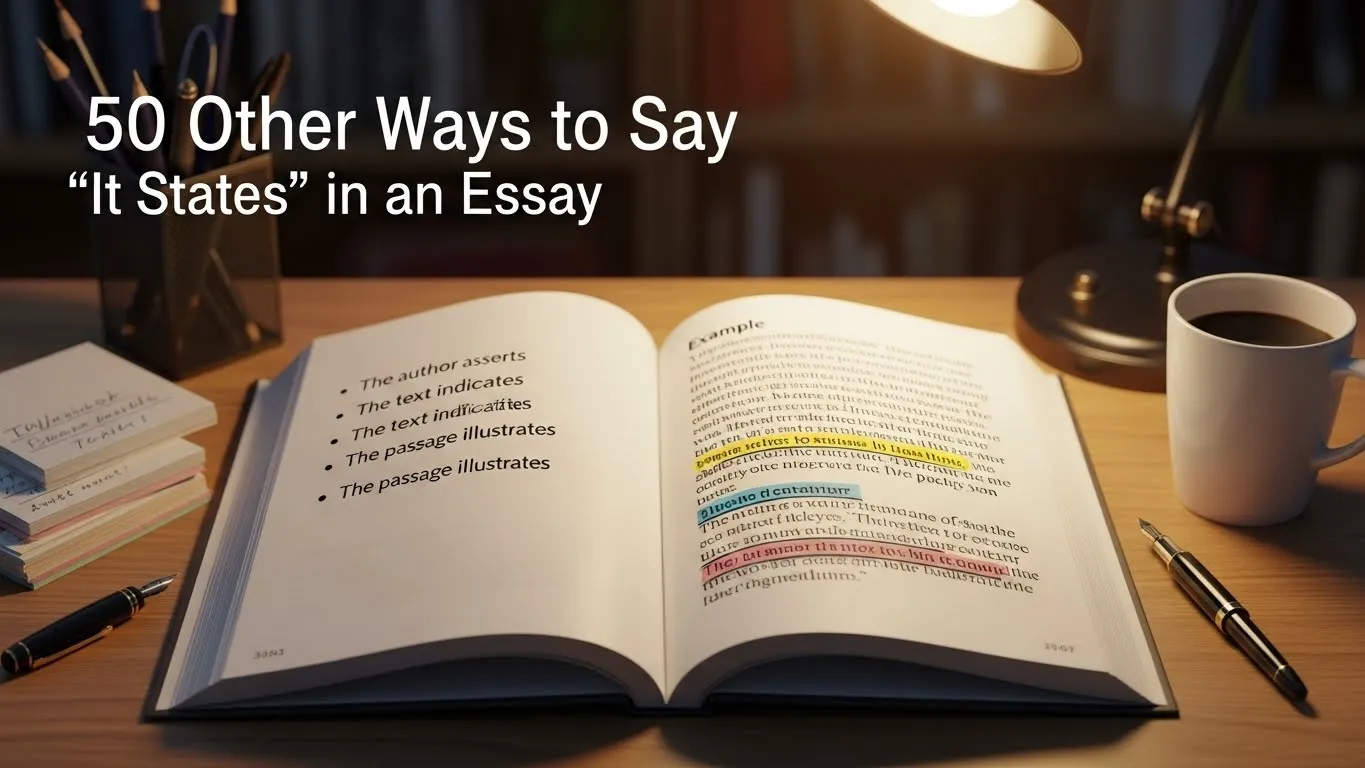
In academic writing, varying your language is essential to maintain reader engagement and demonstrate writing sophistication. Instead of repeatedly using it states, writers can choose alternatives like it asserts, it explains, it illustrates, or it emphasizes.
Each option subtly shifts the tone or focus, allowing for more precise expression. Using diverse phrases improves the flow of an essay and strengthens arguments by clearly attributing ideas or evidence.
By practicing these alternatives, students and writers can make their essays more dynamic, professional, and persuasive, ultimately enhancing clarity and reader understanding.

Go I am Joseph Hall, a passionate creator exploring ideas that inspire and connect. On Replysz.com, I share unique insights and trends that keep you ahead. Join me on this journey of discovery and creativity.