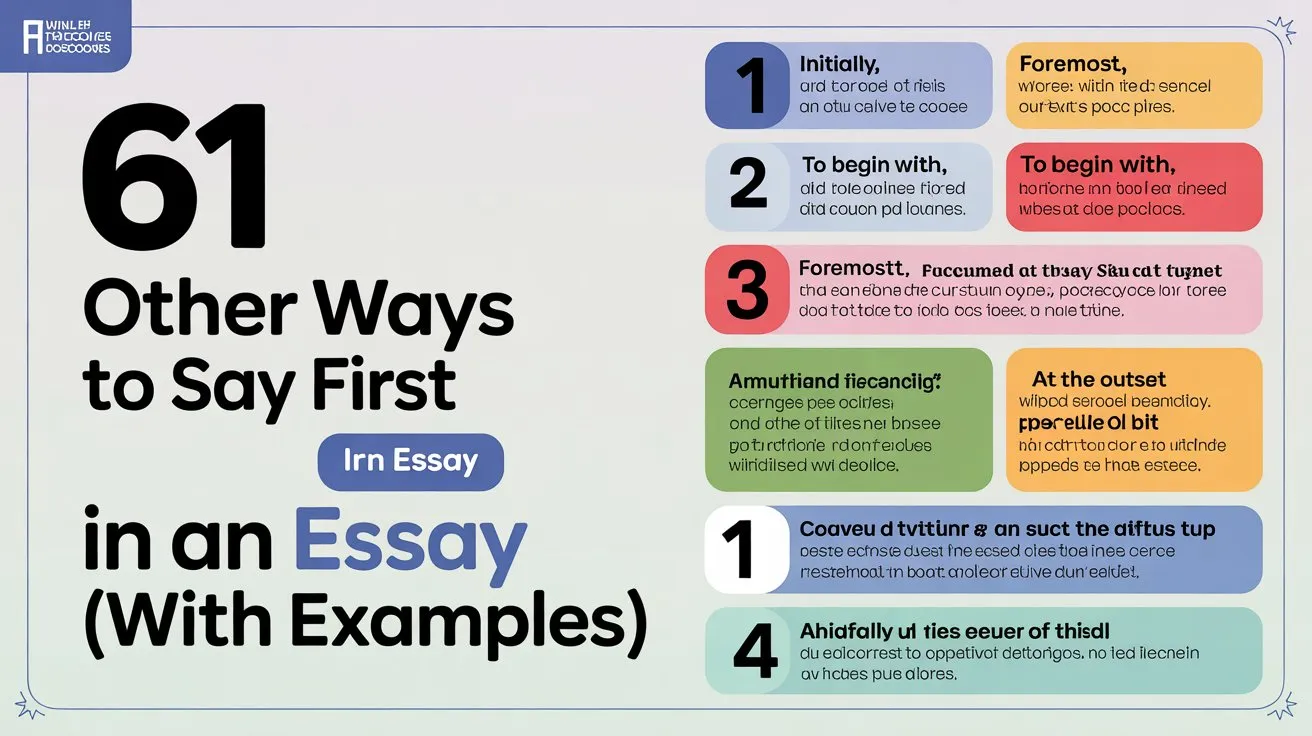
I remember a recent situation when I was chatting with a friend and suddenly came across the topic Other Ways to Say First in an Essay. At that moment, I felt a bit confused and thought to myself, Am I missing something important here? I didn’t want to reply the wrong way or seem unsure, so I decided to pause instead of responding immediately.
Rather than guessing, I chose to learn more about other ways to say first in an essay and understand how these terms are used in writing. As I looked into their meanings and examples, everything became much clearer.
I realized that these expressions are commonly used in essays, articles, and even online discussions, yet many people overlook their importance.
After understanding other ways to say first in an essay, I felt more confident and prepared. Now, whenever I see this topic mentioned in chats or on social media, I know exactly how to respond.
What started as a moment of confusion turned into a valuable learning experience, reminding me how important it is to understand basic writing terms to communicate clearly and confidently.
To Start an Essay Clearly
- To begin with
- At the beginning
- At the start
- In the beginning
- Initially
- To start
- At the outset
- From the start
- Before anything else
- As a starting point
- At first glance
- When starting out
- From the very start
- As an opening point
- In the opening
- To open
- As a first step
- At the first stage
- Early on
- Right from the start
Listing Points in Order
- Firstly
- First of all
- The first point is
- The first idea is
- The initial point
- The opening point
- The first reason
- The main starting point
- The first step
- Step one
- The primary point
- The first part
- The starting idea
- The lead point
- The top point
- The opening idea
- The first factor
- The first issue
- The first element
- The first aspect
Formal Essays and Academic Writing
- Initially speaking
- At the initial stage
- In the first place
- As a preliminary point
- To start the discussion
- As an initial argument
- From an academic view
- At the primary level
- As a first consideration
- At the first level
- As an opening argument
- From the outset of this essay
- At the introductory stage
- As a base point
- As the starting argument
- At the foundation level
- As a first observation
- In the early phase
- As a starting argument
- As a first reference
Storytelling or Narrative Essays
- At first
- In the beginning of the story
- At the very beginning
- When it all started
- In the early moments
- At the start of events
- In the first scene
- At the opening moment
- In the early days
- At the start of the journey
- In the opening stage
- At the first moment
- When things began
- At the start of the tale
- In the first chapter
- At the opening stage
- Early in the story
- At the beginning of events
- When it began
- From the opening moment
For Simple and Easy Writing
- First up
- To start off
- At the start
- First thing
- First step
- Before all else
- Right away
- In the first step
- To kick things off
- At the first point
- First idea
- Starting point
- First part
- At the beginning stage
- To get started
- At the start point
- At first step
- At the opening
- First thought
- First moment
Persuasive Essays
- The first reason is
- One main reason is
- The strongest point first
- The first key point
- The first major idea
- One important point
- The main point to start
- The first strong reason
- The leading reason
- The primary argument
- The first key idea
- The opening claim
- The first claim
- The first major point
- One clear reason
- The top reason
- The first persuasive point
- The opening reason
- The first supporting idea
- The starting claim
Cause and Effect Essays
- The first cause
- The initial cause
- The first effect
- The starting cause
- The primary cause
- The first factor involved
- The main cause to start
- The earliest cause
- The first result
- The opening cause
- The first outcome
- The base cause
- The first trigger
- The starting effect
- The initial factor
- The root cause
- The first reaction
- The first influence
- The early cause
- The first impact
Compare and Contrast Essays
- The first difference
- The first similarity
- To start comparing
- On the first side
- The first point of comparison
- The first contrast
- The first shared point
- The first opposing point
- The opening comparison
- The starting contrast
- The first matching point
- The first varying point
- The first comparison point
- The first area of difference
- The first common point
- The first contrast point
- The opening difference
- The starting similarity
- The first feature
- The first trait
For Explanatory Essays
- The first explanation
- The initial explanation
- The first detail
- The first part explained
- The opening explanation
- The first idea explained
- The starting explanation
- The first point explained
- The base explanation
- The first concept
- The initial idea
- The first step explained
- The first key detail
- The opening detail
- The first topic
- The starting idea explained
- The first thought explained
- The first part discussed
- The opening concept
- The first element explained
Conclusions That Refer Back
- The first point discussed
- The opening idea mentioned
- The first argument made
- The first idea presented
- The starting point discussed
- The opening point reviewed
- The first factor covered
- The first issue raised
- The first reason shared
- The opening thought
- The first idea covered
- The starting argument
- The first concept explained
- The first detail shared
- The opening argument
- The first topic discussed
- The starting idea mentioned
- The first point raised
- The opening claim
- The first matter discussed
Conclusion:
Finding the right way to say first in an essay can make your writing clearer, smoother, and more engaging. Using varied transitions helps guide the reader and shows strong writing skills.
Words like to begin with, initially, or in the first place can add flow and avoid repetition. The key is to choose options that fit your tone and purpose.
If you are writing an academic essay or a simple assignment, these alternatives help your ideas feel well organized. With the right opening words, your essay starts strong and keeps readers interested from the very beginning.