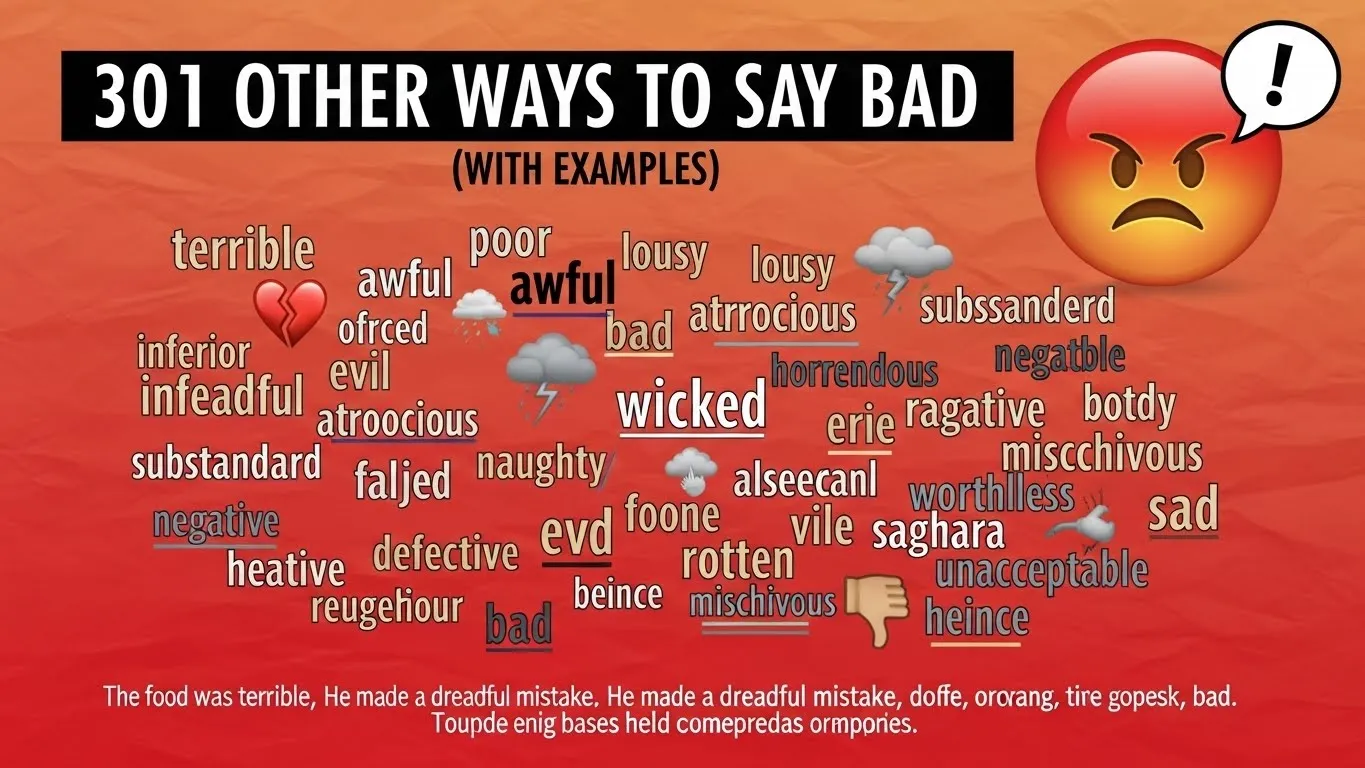
Hello, I want to share something that happened to me recently about Other Ways to Say Bad. I was chatting with a friend when this term suddenly came up, and honestly, at first, I had no idea what it meant.
I kept thinking, “Am I missing something?” It was a bit confusing, and I didn’t want to respond the wrong way.
So, I decided to look into Other Ways to Say Bad and understand its meaning and context. Once I got it, I realized how important it is to know these terms to avoid awkward situations in conversations.
I handled it by learning the proper meaning and responding confidently, and now I feel ready whenever I see Other Ways to Say Bad in chats or on social media.
Terrible Alternatives
- Awful
- Horrible
- Dreadful
- Appalling
- Atrocious
- Abominable
- Dire
- Deplorable
- Frightful
- Ghastly
- Heinous
- Lousy
- Rotten
- Shocking
- Shoddy
- Sinister
- Unpleasant
- Unacceptable
- Vile
- Woeful
Poor Quality Alternatives
- Inferior
- Mediocre
- Substandard
- Defective
- Faulty
- Malfunctioning
- Unsatisfactory
- Weak
- Cheap
- Flimsy
- Unreliable
- Inadequate
- Broken
- Fragile
- Shabby
- Second-rate
- Impaired
- Inefficient
- Unfit
- Insufficient
Emotional Reactions to Bad

- Disappointing
- Unfortunate
- Painful
- Distressing
- Regrettable
- Sad
- Frustrating
- Miserable
- Depressing
- Troubling
- Unlucky
- Dismal
- Hopeless
- Shameful
- Crummy
- Rough
- Awkward
- Embarrassing
- Bitter
- Discouraging
Dangerous or Risky Alternatives
- Hazardous
- Unsafe
- Risky
- Perilous
- Precarious
- Unhealthy
- Harmful
- Deadly
- Toxic
- Unsafe
- Menacing
- Threatening
- Dangerous
- Reckless
- Malicious
- Noxious
- Insecure
- Volatile
- Unstable
- Poisonous
Behavior or Character
- Naughty
- Immoral
- Wicked
- Evil
- Cruel
- Unkind
- Mean
- Selfish
- Dishonest
- Deceitful
- Greedy
- Corrupt
- Rude
- Vicious
- Obnoxious
- Hostile
- Brutal
- Malignant
- Villainous
- Reprehensible
Mistakes or Failures
- Wrong
- Faulty
- Blunder
- Misguided
- Unsuccessful
- Inept
- Mismanaged
- Failing
- Miscalculated
- Flawed
- Botched
- Blemished
- Faulted
- Broken
- Inaccurate
- Incomplete
- Deficient
- Misjudged
- Awry
- Bungled
Weakness or Lack
- Feeble
- Fragile
- Frail
- Insufficient
- Lacking
- Inferior
- Soft
- Tiny
- Poorly made
- Vulnerable
- Meager
- Thin
- Paltry
- Weakling
- Wimpy
- Subpar
- Underperforming
- Limited
- Unimpressive
- Scant
Situations or Experiences
- Bad luck
- Misfortune
- Nightmare
- Disaster
- Tragedy
- Catastrophe
- Crisis
- Setback
- Dilemma
- Mess
- Chaos
- Hardship
- Trouble
- Complication
- Challenge
- Problem
- Debacle
- Confusion
- Fiasco
- Hassle
Food or Taste
- Spoiled
- Rotten
- Stale
- Rancid
- Bitter
- Sour
- Bland
- Tasteless
- Burnt
- Overcooked
- Undercooked
- Unappetizing
- Disgusting
- Nasty
- Awful tasting
- Yucky
- Off
- Unpalatable
- Stinky
- Gross
Miscellaneous
- Annoying
- Irritating
- Frustrating
- Unhelpful
- Ineffective
- Inconvenient
- Uncomfortable
- Heavy
- Harsh
- Ugly
- Confusing
- Messy
- Disorganized
- Stressful
- Difficult
- Painful
- Tedious
- Unwanted
- Inappropriate
- Problematic
Conclusion:
In life, not every experience goes as planned, and encountering challenges or setbacks is inevitable. Understanding and recognizing what is bad or harmful allows us to make better choices, learn from mistakes, and grow stronger.
Language gives us the power to express these experiences in nuanced ways, helping us communicate feelings, judgments, and observations more effectively. By exploring alternative words for bad, we expand our vocabulary, making our speech and writing more precise and engaging.
Ultimately, acknowledging the negative while seeking solutions strengthens our perspective and resilience, turning difficulties into opportunities for growth.